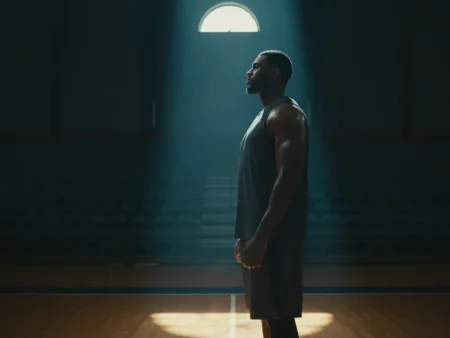

Russell Westbrook has ended his NBA career after 18 seasons, closing the book on one of the most forceful guard careers the league has ever seen. His retirement leaves behind an MVP award, historic numbers, and a reputation built on relentless intensity.
Westbrook, 37, confirmed the decision on Wednesday. NBA insider Chris Haynes described the moment as bittersweet, which fits a player whose career mixed constant production with an equally constant push for more.
Built on pace, power and persistence
Westbrook’s game was never subtle. He played with speed, strength and a level of urgency that made every possession feel immediate. That style helped him finish with career averages of 20.9 points, 8.0 assists, 6.9 rebounds and 1.6 steals per game.
Scott Brooks, who coached him with the Oklahoma City Thunder and later the Washington Wizards, saw that edge early. After Westbrook’s predraft workout, Brooks said he knew exactly what kind of player he was watching.
“Thank goodness I’m not an NBA point guard anymore because there’s no way I can stay in front of this guy.”
Years later, Brooks still spoke about Westbrook in the same way: as a relentless competitor who arrived ready to fight every night.
“I’m going to say this another million times in my life. Off record, on record, with my wife, with my son, with my daughter, with my friends, I tell everybody the same thing: the guy’s a winner and he’s fun to coach because he competes every night and he wants it every night.”
The numbers that defined the standard
Westbrook’s statistical legacy is built around one category more than any other: the triple-double. He turned it from a rare achievement into a regular part of the conversation around his game.
- He recorded a triple-double in four different seasons.
- He is one of only three players ever to average a triple-double for a full season, alongside Oscar Robertson and Nikola Jokić.
- He is the only player to do it four times.
- He owns the NBA record for most career triple-doubles with 209.
- He set the single-season record with 42 triple-doubles.
His best-known season came in 2016-17, when he averaged 31.6 points, 10.7 rebounds and 10.6 assists and won Kia NBA MVP. That year, he broke Oscar Robertson’s long-standing mark of 41 triple-doubles.
Westbrook’s team record in triple-double games also shows how often those performances mattered. His clubs went 153-56 in those contests, a .732 winning percentage.
A résumé built for the Hall of Fame
Even without the triple-double record, Westbrook’s career would stand out as one of the most decorated of his generation. His honours include:
- Nine-time All-NBA selection
- Nine-time All-Star
- Two-time All-Star MVP
- Two-time scoring champion
- Two-time assists leader
- 2012 Olympic gold medallist
- Named among the NBA’s 75 greatest players
That collection places him firmly in Hall of Fame territory and reflects how long he stayed near the top of the league.
From UCLA to Oklahoma City and beyond
Westbrook grew up near Los Angeles and played two seasons at UCLA before the Thunder took him fourth overall in the 2008 NBA Draft. He entered the league at the right time for Oklahoma City, which already had Kevin Durant and would soon add James Harden.
The Thunder’s young core grew quickly. Westbrook made the All-Rookie team after averaging 15.3 points, 5.3 assists and 4.9 rebounds as a rookie, while the team began its rise through the Western Conference.
“That’s not easy to do,” Brooks said.
That Oklahoma City run produced real postseason progress:
- 2010: playoff appearance
- 2011: Western Conference Finals
- 2012: NBA Finals, where the Thunder lost to the Miami Heat
Westbrook spent 11 seasons with the Thunder before moving on to the Houston Rockets, Washington Wizards, Los Angeles Lakers, LA Clippers, Denver Nuggets and Sacramento Kings.
What he said the game meant
Westbrook often explained his approach in plain terms. For him, the job was to give everything every night and leave nothing behind once the game ended.
“That’s one thing I always pride myself on is making sure I leave it on the floor every single night,” he said. “I’ve been blessed and given an opportunity to be able to do that, and I don’t take it for granted.”
That mindset matched how he played and how teammates, coaches and opponents viewed him.
His work will continue off the court
Retirement does not end Westbrook’s public impact. His Why Not Foundation works to build opportunity in underserved communities through education, workforce development and accessible mental health resources.
Westbrook has also made clear that his influence is about more than basketball results. His view of legacy extends well past the box score.
“My legacy is what I do off the floor, how many people I’m able to impact and inspire along my journey.”
That statement fits the arc of his career: a player remembered for force, production and records, but also for the standard he set with effort and conviction.